
What Is Fractional Real Estate Ownership? A Complete Beginner's Guide
What fractional real estate ownership actually is, how it works, what you genuinely own at the end of it, and where the risks lie — explained without jargon.
If you have spent any time on Instagram or LinkedIn lately, chances are you have come across the phrase "fractional ownership" attached to a picture of a Dubai skyline or a swanky apartment building. For a lot of people, the first reaction is curiosity, quickly followed by confusion. Are you actually buying property? Is this some kind of mutual fund? Is your name even on any paperwork?
Fair questions. This guide exists to answer them properly — no sales pitch, no jargon, no rushing you toward a decision. If you have ever typed "what is fractional ownership" into a search bar and come away more confused than before, you are not alone. Here, we will walk through what fractional ownership actually is, how it works, what you genuinely own at the end of it, and where the risks lie. By the time you finish reading, you should be able to explain the concept to a friend over coffee without fumbling.
What Fractional Ownership Actually Means
What exactly is fractional ownership? In simple terms, fractional ownership is a model where a single property is divided into smaller, more affordable shares, and multiple investors each buy a portion — owning a proportional stake in the property's income and value, rather than the whole asset.
Fractional real estate ownership — sometimes also called fractional property ownership — is exactly what it sounds like: instead of one person buying an entire property, the property is divided into smaller, more affordable portions, and multiple investors each buy a fraction of it.
Think of a large apartment or a commercial building worth, say, ₹8 crore. Very few individual investors can write a cheque for the full amount, and even fewer want to tie up that much capital in a single asset. Fractional ownership solves this by splitting that ₹8 crore property into hundreds or even thousands of smaller units — each representing a proportional share of the underlying real estate.
So if you invest an amount equal to 1% of the property's value, you own 1% of that property. Not a certificate. Not a promise. An actual proportional stake in a real, physical asset.
This isn't a brand-new idea, by the way. Real estate investment trusts (REITs), timeshares, and co-ownership arrangements have existed in various forms for decades. What has changed recently is the technology and infrastructure behind it, which has made the process faster, more transparent, and accessible to far smaller ticket sizes than before — sometimes starting from just a few thousand dollars instead of lakhs or crores.
How Multiple Investors Participate in One Property
This is usually the point where people ask: okay, but how does fractional real estate ownership work, exactly? Let's slow down and break it down step by step.
When a fractional ownership platform identifies a property — commercial, residential, or otherwise — it typically structures the ownership through a special purpose vehicle (SPV) or similar legal entity. This entity is the one that legally holds the property title. Investors then buy shares or units in that entity, in proportion to how much capital they put in.
In practice, this means:
It's a bit like owning shares in a company that happens to own one specific building, rather than owning shares in a diversified company. The property is the underlying asset; your investment gives you a proportional economic interest in it.
What an Investor Actually Owns
This is the part worth reading twice, because it varies depending on how a specific platform or deal is structured — and it's exactly the kind of detail you should always verify before investing anywhere.
In most fractional ownership structures, what you own is:
What you typically do not get is:
The exact legal mechanics differ from platform to platform and jurisdiction to jurisdiction, so this is genuinely one of the first things any prospective investor should ask about and get in writing before committing capital.
How Income and Appreciation Generally Work
In broad terms, fractional real estate investors can potentially benefit in two ways:
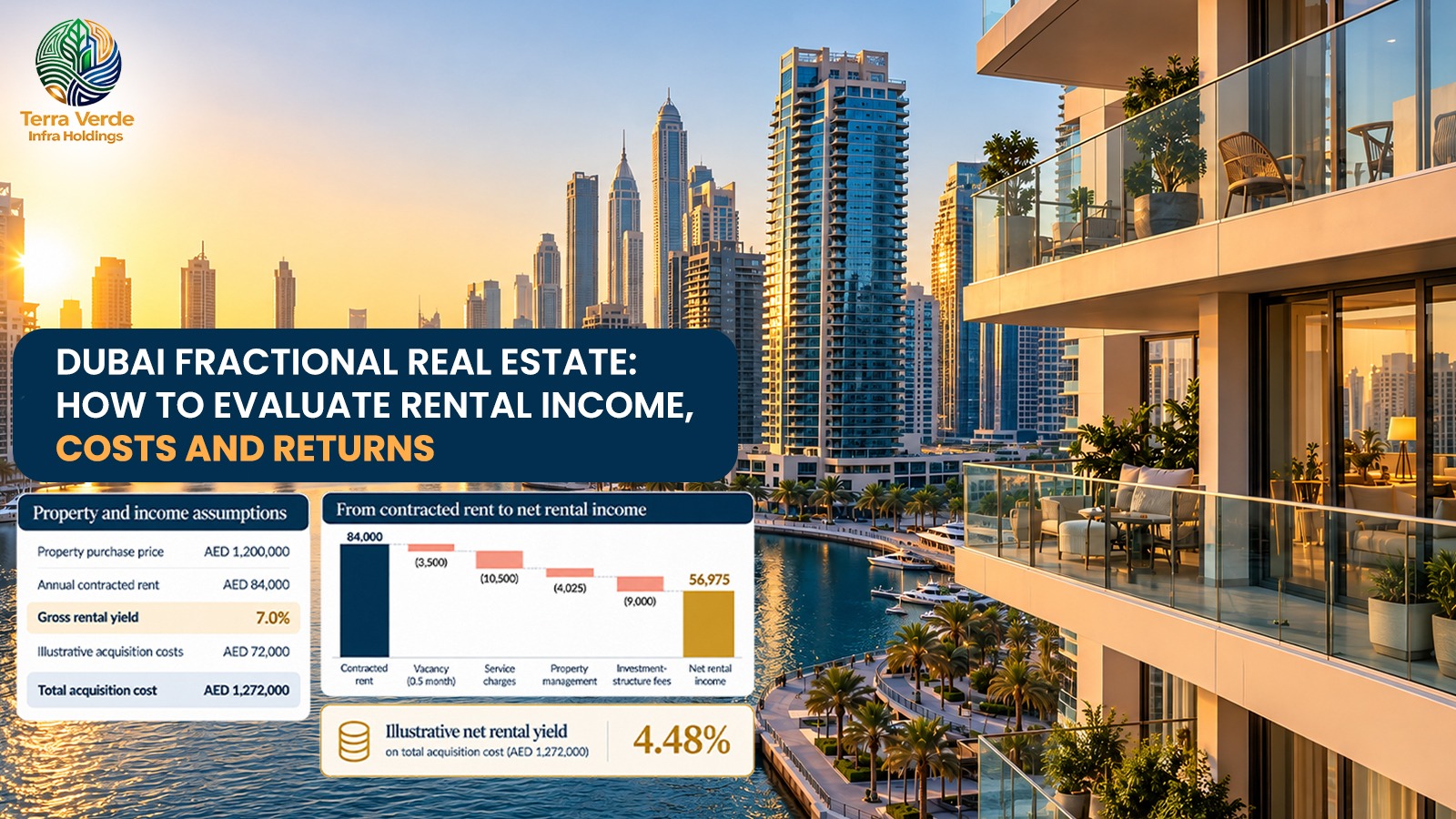
Rental income. If the property is leased out — to a business, a family, or a tenant — the rental income collected is typically distributed among investors in proportion to their ownership share, usually on a monthly or quarterly basis, after deducting management fees, maintenance costs, and other operating expenses.
Capital appreciation. Over time, real estate in a well-chosen location may increase in value. If and when the property is sold, investors receive their proportional share of the sale proceeds, ideally reflecting that appreciation.
Neither of these is guaranteed. Rental yields depend on occupancy, location, and market demand. Appreciation depends on broader economic trends, infrastructure development, and property-specific factors. Anyone presenting fractional real estate as a fixed, guaranteed-return product is oversimplifying — real estate, fractional or otherwise, remains a market-linked asset.
How Fractional Ownership Differs From Buying a Complete Property
This is often the most useful comparison for a beginner, because it clarifies what you're trading off.
Capital requirement. Buying a full property usually demands a large lump sum or a home loan with significant equity. Fractional ownership lets you participate with a fraction of that capital — sometimes a very small fraction.
Diversification. With the capital required to buy one full property, a fractional investor could potentially spread that same amount across multiple properties, locations, or even asset types, reducing concentration risk.
Control. A full owner has direct control — they decide on tenants, renovations, sale timing, and so on. A fractional owner typically has limited or no individual control; decisions are handled collectively or by a manager.
Liquidity. Selling a fully owned property can take months and involves significant transaction costs. Fractional ownership platforms often (though not always) offer more structured or faster exit mechanisms, though this varies widely and should never be assumed — always check the specific liquidity terms before investing.
Management responsibility. Full ownership comes with direct responsibility for maintenance, tenant management, and legal compliance. Fractional ownership generally outsources this to a professional manager, which can be convenient but also means trusting a third party's competence and integrity.
Ticket size flexibility. Perhaps the most obvious difference: fractional ownership allows participation at price points that were previously inaccessible to most retail or first-time property investors.
Neither model is inherently "better" — they serve different goals, risk appetites, and capital positions.
Key Risks and Limitations to Understand
No honest guide to fractional ownership would be complete without a clear-eyed look at the risks, because this is where beginners most often get caught out by enthusiasm.
None of this means fractional ownership is a bad idea. It means it deserves the same scrutiny, patience, and homework as any other investment decision — arguably more, given how new and fast-evolving this space still is.
Bringing It All Together
Fractional real estate ownership, stripped of the marketing language, is a fairly simple idea: pool capital from multiple investors, buy a property through a shared legal structure, and distribute income and appreciation proportionally. It lowers the barrier to entry into real estate, allows for smaller and more diversified bets, and outsources day-to-day management to professionals.
But it is still real estate. It still carries market risk, liquidity considerations, and a dependence on the people managing the asset and the legal structure behind it. Understanding these mechanics — what you actually own, how returns are generated, and what could go wrong — is the single most important step before putting any money into this space.
If you'd like a more detailed, structured breakdown of how fractional ownership works, the terminology you'll come across, and the questions worth asking any platform before investing, we've put together a free resource to help.
Download the Fractional Real Estate Beginner's Guide and get a clear, no-jargon reference you can keep coming back to as you explore this space.
Frequently Asked Questions
Fractional real estate ownership is an investment model where a high-value property is divided into smaller, affordable shares. Multiple investors pool their capital to buy a proportional stake in the property, earning a share of its rental income and value appreciation.