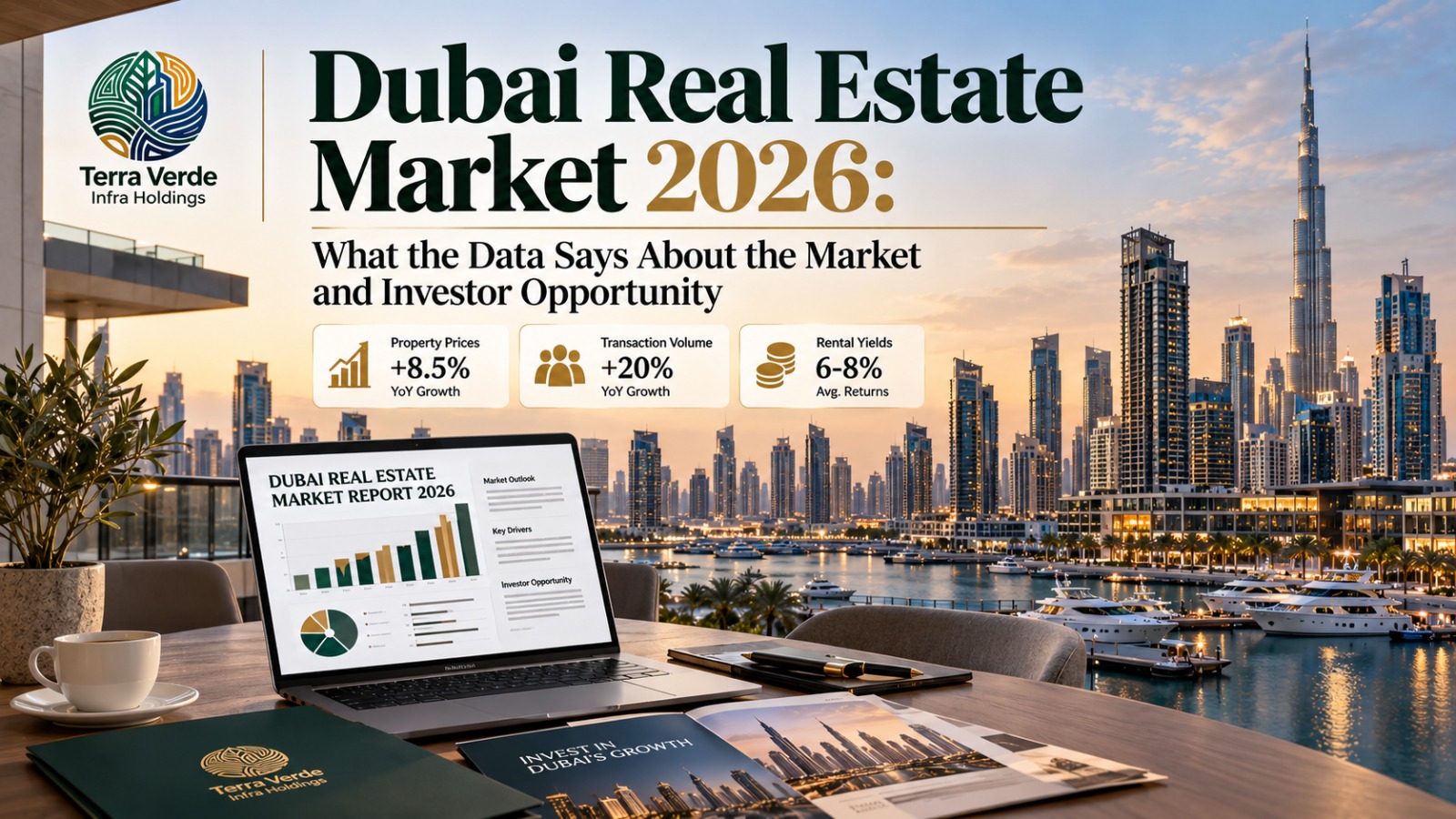
Dubai Real Estate Market 2026: What the Data Says About the Market and Investor Opportunity
Explore the Dubai real estate market in 2026, including sales activity, residential demand, rents, supply, off-plan trends and what investors should examine when evaluating Dubai property.
Dubai Real Estate Market 2026: A Market With More Depth, More Supply and More Choice
What is happening in the Dubai real estate market in 2026? The short answer is: activity remains substantial, international demand remains important, and the residential market is becoming more differentiated.
Dubai Land Department reported AED 252 billion of real-estate transactions in Q1 2026, up 31% in value year on year, alongside AED 173 billion of real-estate investment. Luxury real-estate investment reached AED 87.71 billion in the quarter, up 26%. Foreign investment value reached AED 148.35 billion.
These figures establish the scale of the market. They do not mean every property will perform in the same way. For investors, the more useful question is what is happening underneath the headline numbers: residential demand, rental conditions, supply, location, asset quality and ownership structure.
How Is the Dubai Property Market Performing in 2026?
The market entered 2026 with significant transaction momentum. DLD recorded AED 252 billion in total real-estate transaction value in Q1, with 60,303 real-estate transactions. By mid-year, industry reporting based on DLD transaction data put H1 sales at approximately AED 286.4 billion across 86,005 transactions, making it the second-strongest first half on record.
That distinction matters: a market can remain highly active while the composition of demand changes. Transaction volume, property type, location and price segment all tell different parts of the story.
Dubai's International Buyer Base Remains a Major Market Feature
Dubai's residential market continues to attract buyers from a wide range of countries. A July 2026 report citing Harbor Real Estate's analysis of DXBinteract data estimated Indian nationals at 20.6% of purchasing activity in early 2026, followed by buyers from the UK and Egypt. This is third-party analysis rather than an official DLD nationality series, so it should be presented as an estimate rather than a government statistic.
For Terra Verde's audience, this matters because Dubai property is increasingly a cross-border investment conversation—not only a local housing-market conversation.
What Is Driving Residential Demand?
Population growth is one of the clearest demand indicators. Dubai's population reached 4,807,185 on 28 September 2026, according to reporting on Dubai Data and Statistics Establishment figures, up 226,885 from the beginning of the year.
The broader economic base also matters. Dubai's Q1 2026 GDP was reported at AED 232 billion, with year-on-year growth of 2.4%. These indicators provide context for housing demand, but they should not be treated as a direct forecast of property prices or investment returns.
Rental Demand: A Key Part of the Residential Story
Dubai's rental market remains an important part of the residential investment equation. Dubai Land Department reported AED 32.2 billion in rental-contract value in Q1 2026.
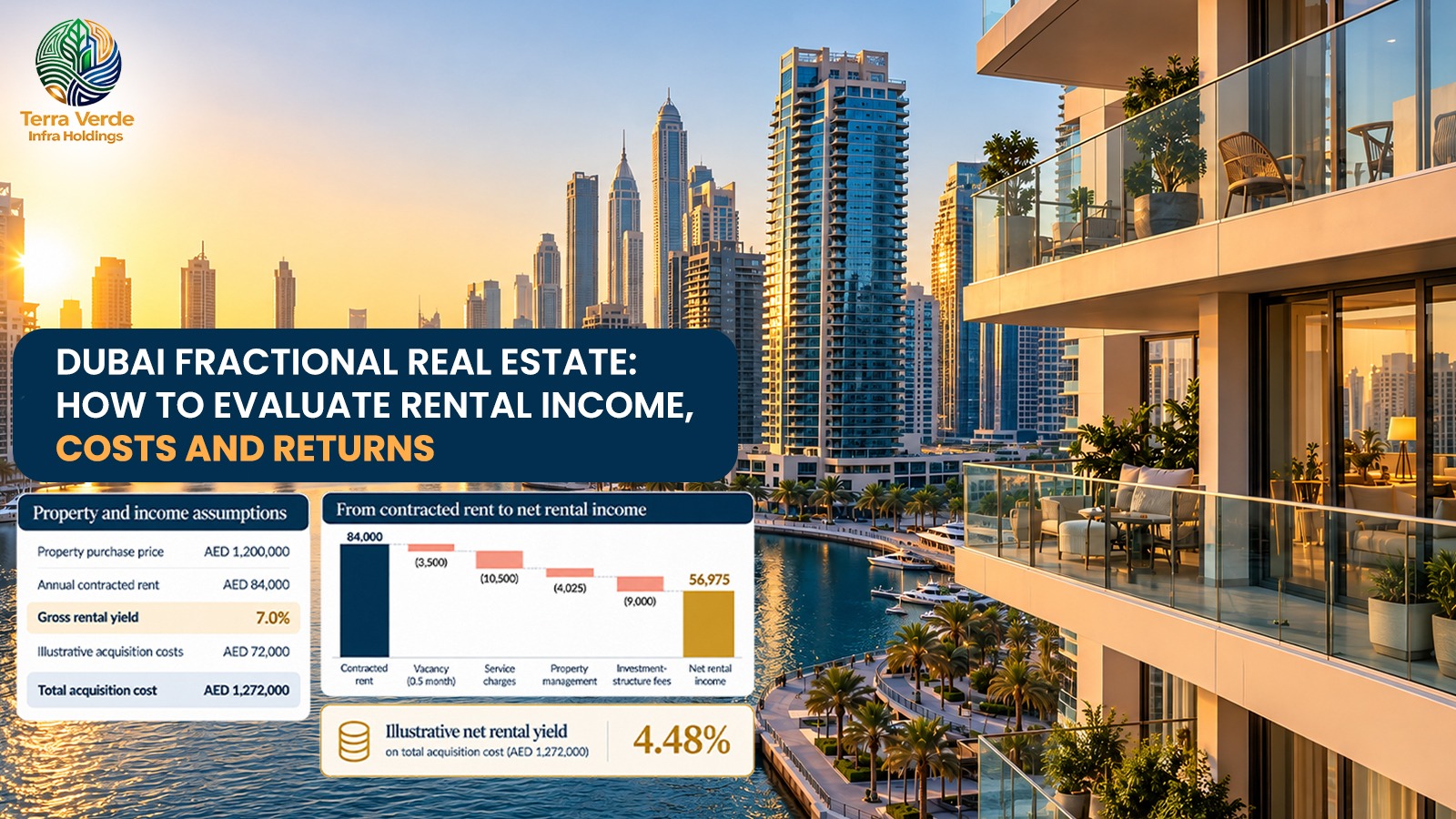
Engel & Völkers reported an average gross residential rental yield of 6.3% across Dubai as of August 2026, with actual yields varying by property type, location, purchase price and costs.
For investors, gross yield should only be the starting point. Service charges, management costs, vacancy, maintenance and other expenses can materially change the net economics of an individual property.
Supply Is Expanding — and That Creates More Choice
One of the defining characteristics of the 2026 market is the scale of new residential supply. DLD reported that 24,537 new units were delivered during the first half of 2026, while 104 real-estate projects were completed.
Supply should not automatically be interpreted as a negative. New inventory can give buyers more choice and create more options across communities, layouts, developers and price points. At the same time, investors should understand how much comparable stock is entering the specific community they are evaluating and how that could affect leasing competition.
The practical takeaway is not "the market is slowing."
It is that property-level fundamentals matter more when investors have more choice.
Off-Plan vs Ready Property: What Investors Should Understand
Off-plan continues to account for a substantial share of Dubai transactions. Industry reporting based on DLD data put off-plan at approximately 71% of H1 2026 transactions.
Off-plan can offer staged payment structures and access to new developments, but the investment case depends on developer execution, delivery timing, pricing, construction progress and the market at handover.
Ready or secondary properties offer a different information set. Investors can assess an existing building, current rental evidence and the property's immediate operating condition.
Neither route is automatically superior. The relevant question is whether the property, price, structure and investment objective align.
Premium Residential Real Estate Continues to Attract Capital
The premium segment remains an important part of Dubai's global property story. Knight Frank reported US$5.1 billion of US$10 million-plus home sales in H1 2026, up 14% year on year, across 296 transactions.
That does not mean every luxury property is equally attractive. It does show the depth of demand at the upper end of Dubai's residential market.
For a premium investment brand, the more useful question is what creates enduring demand: location, accessibility, developer quality, community infrastructure, property specification, tenant or end-user profile and supply dynamics.
Infrastructure Can Change the Investment Conversation
Dubai's infrastructure pipeline is another factor investors monitor. The Metro Blue Line is planned to connect areas including Dubai Creek Harbour, Dubai Silicon Oasis, Academic City, Mirdif and Al Warqa, with opening targeted for 2029.
Infrastructure does not guarantee property appreciation. Its value to an investor is as a lens for understanding future connectivity, accessibility and potential changes in how communities function.
What Has Changed for Investors in 2026?
The most useful way to describe 2026 is not as a simple "up" or "down" market. It is a market in which there is substantial activity alongside greater differentiation between properties.
That makes the evaluation process more important—not because investors should become fearful, but because a larger and more diverse market gives them more variables to examine.
Where Fractional Ownership Fits Into This Market
This is where the broader Dubai market story connects naturally with Terra Verde.
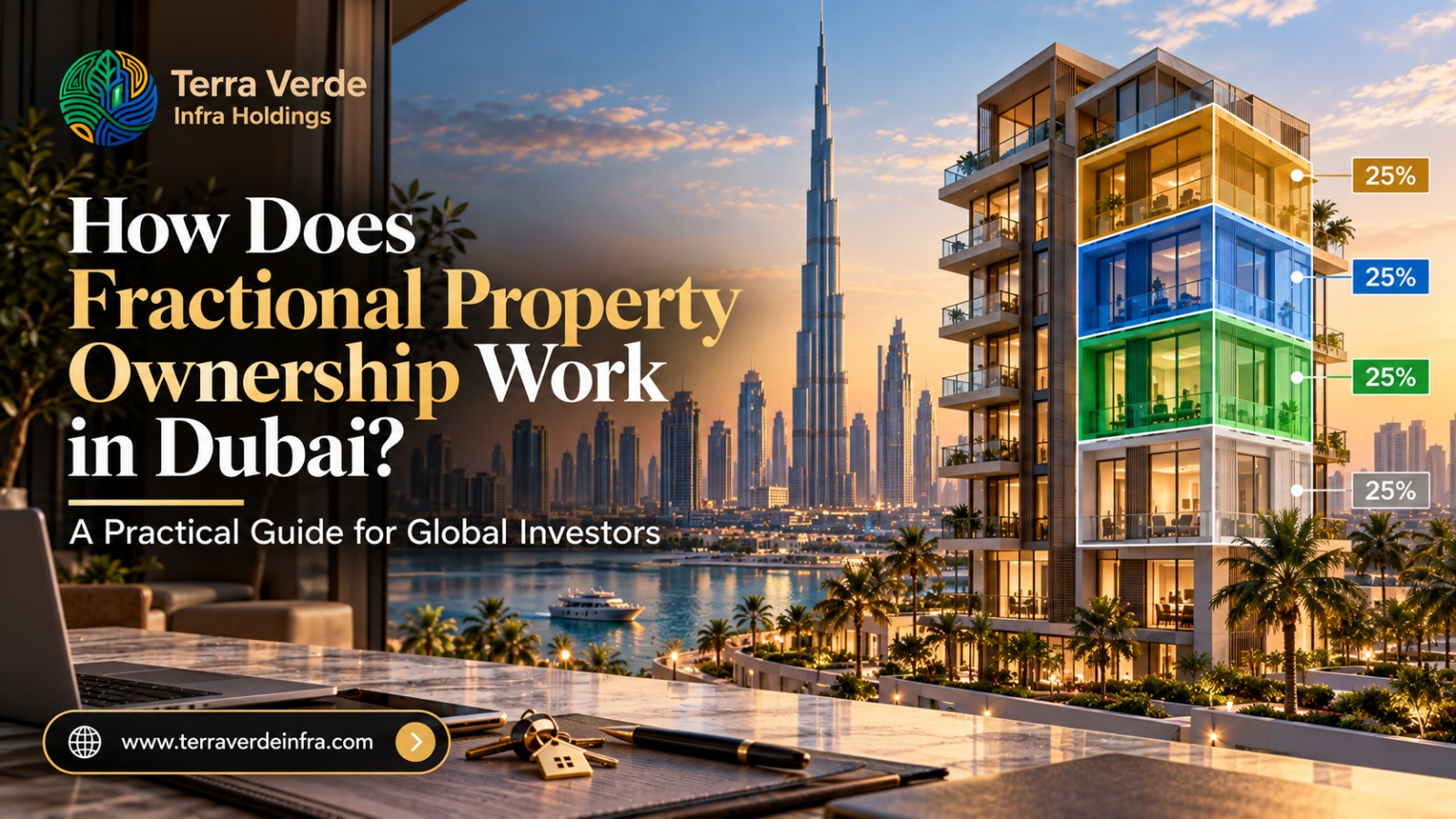
Investors may want exposure to Dubai residential real estate but may not want to deploy the full capital required to acquire an entire premium property independently. A fractional structure can provide a way to participate in a defined residential asset through a structured ownership model.
But fractional ownership does not make property selection less important. In fact, the underlying property, legal structure, economics, management and exit mechanism remain central to the investment case.
That is why Terra Verde's positioning should not be "Dubai property is booming, therefore invest."
The stronger proposition is: understand the market, identify the right asset, understand the structure, and then decide whether the opportunity fits your objectives.
What Should an Investor Ask Before Choosing a Dubai Property?
The Investor Takeaway
Dubai's 2026 real estate market offers investors a large and internationally connected residential market, strong transaction activity, substantial rental demand and a deep premium segment.
The opportunity is therefore not simply about asking whether Dubai property is still active. The more useful question is which property, location, economics and ownership structure make sense for a particular investor.
For Terra Verde, this creates an important education opportunity: help investors understand the market first, then explain how structured fractional access can fit into that market.
Frequently Asked Questions: Dubai Real Estate Market 2026
The market remains highly active, with DLD reporting AED 252 billion in Q1 2026 transaction value and continued international investment. At the same time, residential conditions vary by property, community and segment, so headline market activity should not be treated as a forecast for every asset.
Sources & Research Notes
Disclaimer: This article is for general educational and informational purposes only. It does not constitute financial, legal, tax or investment advice and does not guarantee any return or outcome. Property values, rental income and investment results can rise or fall. Investors should obtain appropriate professional advice for their circumstances.