
How to Buy a Fractional Share in Dubai Property: A Complete Guide for Indian Investors
Learn how to buy a fractional share in UAE property with this guide for Indian investors covering costs, process, risks and returns.
Dubai property has traditionally been associated with large-ticket purchases. Fractional ownership is changing the way investors can access the market by allowing multiple investors to participate in a defined share of a property rather than purchasing the entire asset. This model, widely known as a fractional share in UAE property, is opening Dubai's residential market to a broader base of investors than ever before.
For Indian investors, this creates a practical way to explore Dubai residential real estate with a lower entry point, while still requiring the same disciplined approach to understanding the asset, ownership structure, fees, income potential and exit process.
This guide explains how fractional Dubai property works, what investors should check before committing capital, and how to evaluate an opportunity beyond the headline numbers. Whether you call it fractional property ownership UAE or fractional real estate investment UAE, the fundamentals covered in this guide apply to any structured Dubai opportunity.
What Does a Fractional Share in Dubai Property Actually Mean?
A fractional share means an investor owns a defined interest in a real property or in a legal structure that holds the property. Instead of purchasing an entire apartment or building, multiple investors participate according to the structure and share size offered.
For example, if a residential asset is valued at $400,000 and the structure is divided into 100 equal interests, a $4,000 interest would represent 1% of the underlying value, subject to the exact legal and commercial structure.
The important point is that 'fractional ownership' is not one single legal format. The ownership rights, income distribution, fees, governance and exit mechanics depend on how the investment is structured. That is why investors should understand the legal documents before focusing only on the entry price or projected return. Understanding this distinction is the real starting point for anyone researching how to buy a fractional share in UAE property.
Why Are Indian Investors Looking at Dubai Property?
Dubai combines an internationally active residential market with a property ecosystem that is increasingly accessible to overseas investors.
For Indian investors, Dubai can also provide geographic diversification and exposure to a global real-estate market. The UAE's tax treatment of individual property income and gains can be an additional consideration, although Indian tax residents must separately consider their Indian reporting and tax obligations. It's also why more investors are actively looking to invest in fractional ownership of UAE property as part of a diversified strategy.
The opportunity is therefore not simply about whether Dubai property is 'rising' or 'falling'. A more useful question is: how do you identify a well-structured property opportunity and understand the economics behind it?
That makes factors such as location, developer reputation, asset quality, rental demand, pricing, ownership structure, fees and exit mechanics important parts of the decision.
How Fractional Real Estate Investment in Dubai Works
While the exact process varies by provider, a typical fractional investment journey can include:
What Should You Check Before Investing?
A lower entry point does not remove the need for due diligence. This is especially true for anyone looking to buy fractional property in UAE, where offering structures can vary significantly between providers. Before investing, look at the complete structure rather than only the marketing headline.
A transparent provider should be able to explain these points clearly and provide the relevant documentation.
Questions to Ask Before Choosing a Fractional Property Opportunity
Before committing capital, an investor should be able to get clear answers to questions such as:
The objective is not to find an investment with no risk. It is to understand exactly what you are investing in.
Can Indians Invest in Dubai Fractional Property?
Resident Indians and NRIs can have different routes for investing in overseas property, and the applicable compliance requirements depend on residency, funding source and the investment structure.
Resident Indians should confirm the applicable RBI/LRS, remittance, tax and reporting requirements with their authorised dealer bank and qualified tax adviser before transferring funds. NRIs should likewise confirm the relevant rules applicable to their residency and source of funds. These considerations are central to any fractional share in Dubai property for Indian investors evaluating opportunities today.
Because remittance, TCS and tax rules can change, current figures and requirements should be verified at the time of investment.
A Simple Illustrative Example
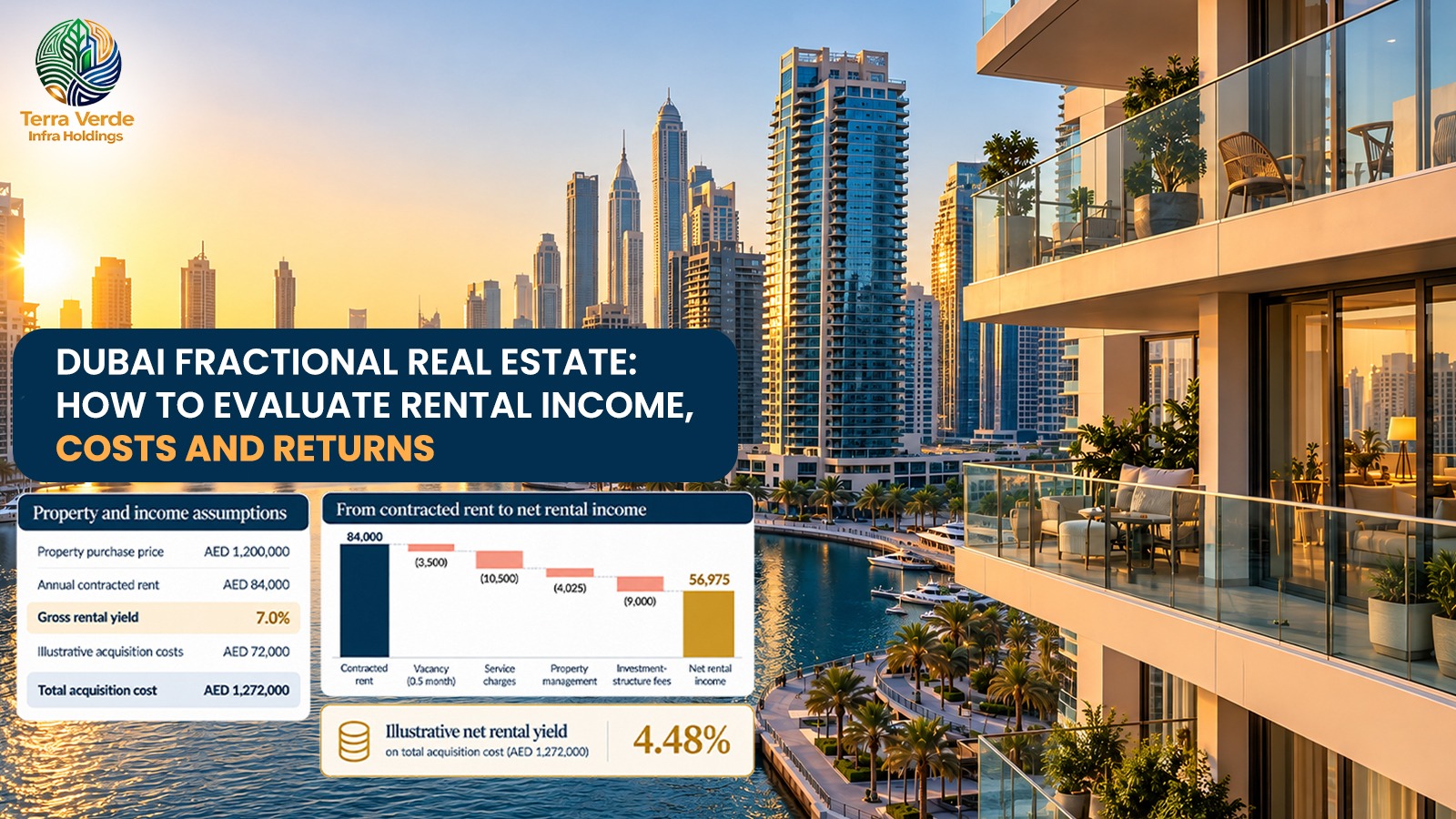
Suppose an investor participates with $4,000 in a Dubai residential opportunity that has a projected annual rental yield of 8%.
An 8% gross projection would equate to approximately $320 in annual gross rental income before applicable fees, costs, vacancies and taxes. This is an illustration, not a promised return.
The broader advantage of a fractional structure is the ability to consider participation in multiple assets over time rather than concentrating a large amount of capital into a single property. Whether that approach is appropriate depends on the investor's objectives, risk tolerance, time horizon and the specific opportunities available.
Frequently Asked Questions
Minimum investment levels vary by provider and opportunity. Always confirm the current minimum directly from the provider and review what that amount represents.
Why the Structure Matters
Fractional ownership is ultimately about access, structure and transparency.
The lower entry point can make Dubai residential real estate easier to explore, but the quality of the opportunity still depends on the underlying asset, legal structure, economics, management and exit process.
For investors considering a fractional Dubai opportunity, the right starting point is not simply 'What return can I get?' It is 'What exactly am I investing in, how is it structured, and how does the investment work from entry to exit?'
For those who want to understand how a structured Dubai fractional opportunity works, the next step is to review the specific asset, investment structure, documentation and economics with the provider before making a decision.